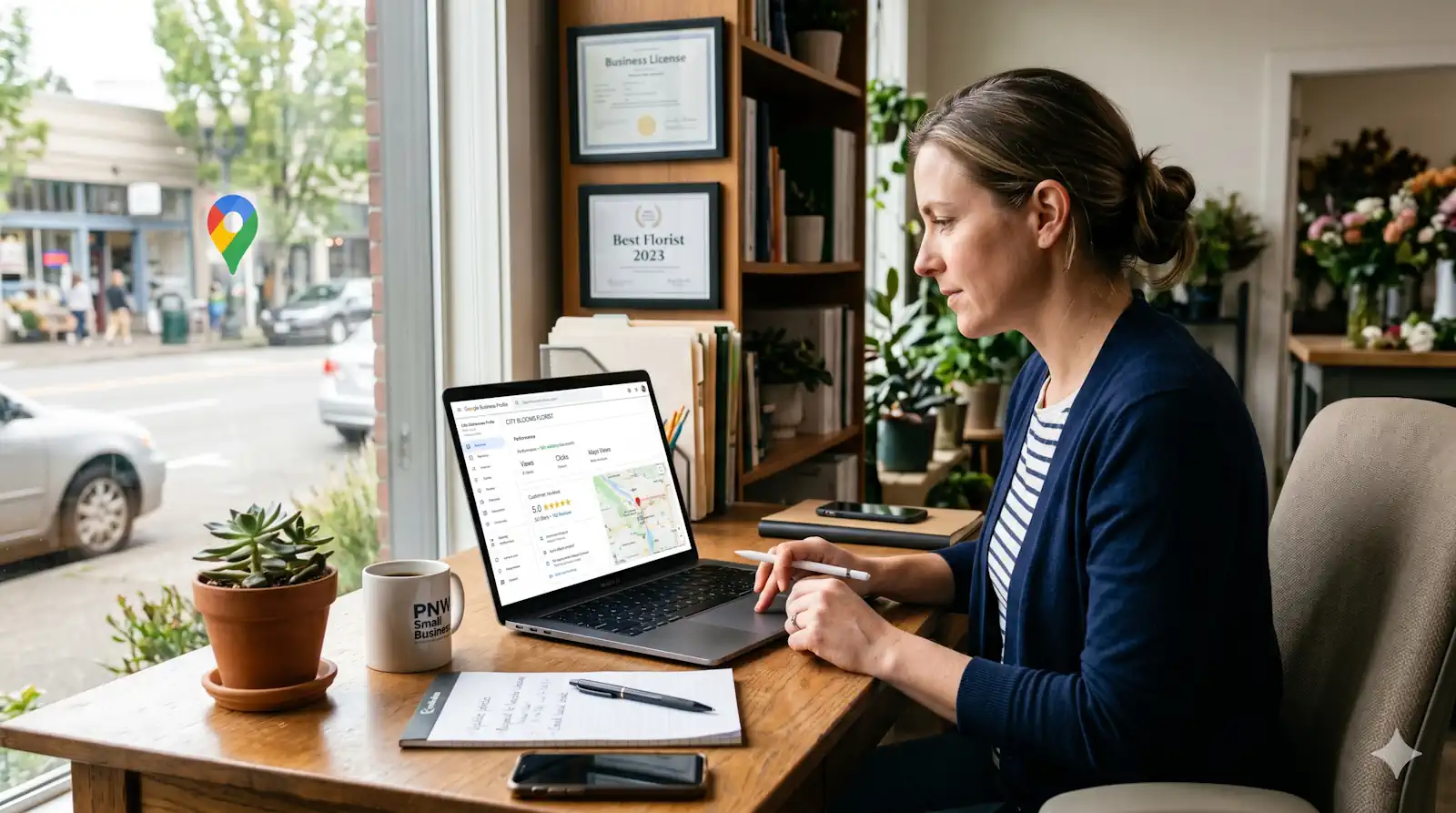
A lot of local business owners only look at their Google listing when something has gone wrong. A phone call has dropped off, a competitor appears above them, or a customer says they could not find the right opening hours.
That is understandable. Running a business leaves little time for checking every online detail. But local visibility is no longer something to set up once and forget. In 2026, the businesses most likely to do well in Google Maps are usually the ones that keep their information clear, useful and current.
This does not mean chasing every local SEO trend. It means getting the basics right, then building steadily on top of them.
Local SEO is becoming more practical, not more mysterious
Many business owners hear the phrase local SEO and assume it must involve technical work hidden in the background. There is some technical detail, but the main aim is simple: help Google understand who you are, where you are, what you offer and why a nearby customer may find you useful.
Your Google Business Profile sits at the centre of this. It connects your business to Google Search and Google Maps. It can show your address, service area, opening hours, reviews, photos, products, services, updates and contact options.
For a local customer, this may be the first impression they get of your business. For Google, it is one of the clearest sources of information about your local relevance.
The priority is not to make the profile look busy for the sake of it. The priority is to make it accurate, specific and genuinely helpful.
Start with the information customers rely on
Before thinking about advanced tactics, check the details that customers use to decide whether to contact you.
- Your business name should match your real-world name.
- Your address or service area should be accurate.
- Your phone number should be correct and answered where possible.
- Your website link should go to a useful page, not a dead or confusing page.
- Your opening hours should reflect reality, including bank holidays where relevant.
- Your main category should describe what you primarily do.
Small errors can create friction. If a customer sees different opening hours on your website and your Google listing, they may hesitate. If your category is too broad, Google may struggle to match you with the right searches.
Clear information is not exciting, but it is often where stronger local visibility begins.
Choose categories and services with care
Categories are one of the most important parts of a business listing because they help Google understand what type of business you are. Your primary category should be the closest fit for your main service, not necessarily the broadest option available.
For example, a plumber who mainly installs boilers may need a different approach from one who focuses on emergency call-outs. A beauty salon offering several treatments still needs to make clear what its core service is.
The services section is also worth using properly. Add the services that customers actually search for, and write descriptions in plain English. Avoid stuffing the same phrase into every service. It reads badly and does not help customers make a decision.
Think about how people describe their problem. They may not search in technical terms. They might search for boiler repair near me, dog groomer open Saturday, or accountant for small business. Your profile should make it easy for Google and customers to connect those needs with what you offer.
Local relevance depends on more than distance
Distance matters in Google Maps, but it is not the only factor. Google also considers relevance and prominence. In simple terms, this means whether your business appears to match the search and whether there are signs that your business is known, trusted or active.
You cannot move your premises just to rank for another town, and you should not pretend to be based somewhere you are not. What you can do is strengthen the signals around your genuine location and service area.
That includes keeping your local listing complete, earning relevant reviews, adding useful website content, and making sure your business details are consistent across the web.
If you serve several nearby towns, your website can explain this in a sensible way. A single page listing every town in the county is rarely helpful. Better pages answer real customer questions and explain the services available in those areas.
Reviews need steady attention
Reviews are not just star ratings. They are part of how customers judge whether to trust you. They can also help Google understand the services people associate with your business.
A practical review approach is better than an occasional push. Ask customers at a natural point, make the process easy, and respond in a calm, professional way. Do not offer incentives for reviews, and do not ask people to use specific words.
When replying, avoid copy-and-paste responses every time. A short, genuine reply is enough. Thank the customer, acknowledge the service where appropriate, and keep it professional.
Negative reviews should be handled carefully. A defensive reply can put future customers off. A measured response that addresses the issue and invites further contact usually reflects better on the business.
Your website still supports your Maps presence
Some businesses put all their attention into the Google listing and forget the website. That is a mistake. Your website gives more space to explain your services, answer questions and show evidence of the work you do.
The page linked from your profile should support the listing. If your profile says you provide emergency electrical repairs, the website should make that clear. If you serve a defined area, say so. If customers need to know prices, booking steps, qualifications or availability, make the information easy to find.
A simple, clear website can help local SEO more than a large site full of thin pages. Each page should have a purpose. It should help a customer understand whether you are the right fit.
This is especially important for service businesses, where customers may compare several providers before calling. Your profile may win the click, but your website often helps win the enquiry.
Fresh activity should be useful, not forced
Adding photos, posts, products and updates can help keep a profile current. But activity should not be done just to tick a box.
Useful photo updates might show recent work, your premises, your team, your vehicles, or examples of products. They should be natural and relevant. Avoid images that look too polished if they do not reflect the real business.
Posts can be useful for seasonal changes, new services, helpful reminders or local announcements. A post about Christmas opening hours, spring garden services or a new appointment option may be more valuable than a vague promotional message.
The same applies to questions and answers. If customers often ask about parking, access, service areas, call-out fees or booking times, make sure the information is clear on your profile and website.
This article is based on the ideas discussed in the embedded video, with added UK local business context and practical guidance for business owners.
Common mistakes that hold local listings back
Most local visibility problems are not caused by one dramatic error. They are usually the result of several small issues building up over time.
- Using the wrong main category: A broad or inaccurate category can weaken relevance for the searches that matter most.
- Ignoring opening hours: Out-of-date hours can frustrate customers and reduce trust.
- Adding keywords to the business name: Your business name should reflect your real-world name, not a list of services or locations.
- Letting reviews go unanswered: Responses show that the business is active and attentive.
- Linking to a poor website page: A confusing or thin landing page can lose potential enquiries.
- Creating weak location pages: Pages made only to target town names rarely help customers.
- Forgetting to check the profile: Business details can become outdated, and suggested edits may appear.
None of these issues need panic. They simply need a structured review and sensible improvements.
Measure the actions that matter
It is easy to focus on where you appear in Maps from one search on one device. Rankings can vary by location, search wording, time and user behaviour. A business owner searching from home may see different results from a customer standing nearby.
Instead of watching one position too closely, look at a wider picture. Are calls improving? Are direction requests relevant? Are website visits from the listing leading to enquiries? Are the right services being found?
A Visibility Check can help identify where your profile appears, which areas may need work, and whether the listing is aligned with the searches your customers use.
Tracking should support better decisions. It should not become a distraction from improving the information customers actually see.
What this means for your business in 2026
For UK local businesses, the direction is fairly clear. Google is trying to match people with businesses that are relevant, nearby, trustworthy and useful. Your job is to make those qualities easier to understand.
That means your local listing should accurately reflect the business. Your website should support the same message. Reviews should be encouraged in a compliant and natural way. Content should answer real customer questions. Photos and updates should show that the business is active.
There is no guarantee that any single change will improve your position in Google Maps. Local search is competitive and varies by market. But a well-maintained profile gives your business a stronger foundation than one that is incomplete, outdated or unclear.
If you have not reviewed your listing for a while, start with the basics. Check the details, categories, services, reviews, photos and website link. Then look at how your business appears for important local searches across your real service area.
If you would like a practical view of where things stand, Internet Marketing Agency SW can help with a Local Visibility Check and advice on improving your Google Maps visibility without overcomplicating the process.